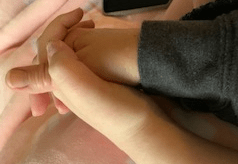
Lean on Me

I feel like I’m an open person.  I try to be honest about who I am and what I value in life.  Most people who know me know that my last few years have been colored by my daughter Ally’s illness and death.  (If you’ve read my blog at all, you know this, too.)  I am absolutely fine with talking about loss, grief, my daughter, and all the emotions I’ve walked through.  Still, there is one thing I’d like to address that goes along with being a bereaved parent — people are afraid to lay their troubles on me.  For instance, I can be having an ordinary conversation with a friend, and he/she will say, “I feel bad for telling you this.  I know this is nothing compared to what you’ve gone through.”  

First off, let me say there is no comparison of grief and pain.  We all have our own hardships.  We all have hurt and sadness.  But there is no such thing as a grief competition.  I don’t want to be the “Big Winner”  because I’ve lost my daughter.   I know my loss is a big one, and yet I do not want to be the kind of person who forgets to, or cannot, care for others.  

When Ally was sick, immediately after she died, and the months since her celebrations of life (there were two), my family and friends have carried me.  I survived the worst of times because of the people in my life.  I had loved ones call and text, send cards, and bring food. Friends took me on walks and got me out of the house for bits of time to distract me.   Our family came to be with us and to spend time with Ally before she died.  And my sister and I went to the Price Chopper parking lot one night and screamed to the Universe.  My point — I was never alone in my grief.  People listened and cared for me and my entire family.

I am writing this because I do not want my friends to feel alone in their struggles AND I do not want people to shy away from leaning on me.  I feel certain that my way through this mess, my way to honor Ally, is to help other people struggling.  I never want my friends, family, or heck — even people I don’t know, to feel like they have no one to call when they need support.  I am tough, and though I’m grieving myself, it is important to me to help others in the way that they helped my family.  I want to show up, listen, maybe advise, but mostly just be present.

One of the saddest things I’ve heard since losing Ally is from another bereaved mom in a Facebook group I’m in.  With tears in her eyes, she shared with our group that since losing her child, her friends have abandoned her.  They didn’t know what to say, so they dropped out of the picture or stayed away.  I can’t even fathom how horrible this must feel for her.  This was the exact opposite of what I have experienced, and for that, I’m immensely grateful.

I believe in facing hard things head on, and for me, that means being there for people, even if I am in pain.  I lessen my own pain, or at the very least distract myself from pain, by showing up for others.  I may not have the right words.  But I will listen, hold your hand, take you for a walk, give you a hug.  So please, friends, if you need me, give me a ring.  Shoot me a text.  Drive to my house.  You are not alone.  

“No matter how many obstacles we face from birth—the outcome of letting loose love and showing up marks humankind— for success wins human equality, discreetly.”

Kamini Arichandran

How to Help a Friend Through Grief

a woman rests her head on another person's shoulder

Yesterday, I left work early to attend a grief seminar.  Yes, I’ve become that super fun person who talks about grief, goes to grief events and then reflects.  But when you’re sitting in grief, it’s something that’s on your mind constantly.  And this seminar got me thinking.

I used to be awkward about grief.  (To be fair, I think we’re all awkward about grief — at least in the beginning.)  When a friend lost a parent or spouse, I didn’t know what to say.  I had the vague sense that saying SOMETHING was better than not acknowledging the loss.  But I’m pretty sure up until this last year, I didn’t know WHAT to say or even what to do.  I have some residual guilt about this — some situations that I didn’t come through in the way I would want to today.  

In May, I lost my sweet daughter Ally.  Prior to her death, she’d had a long battle with cancer.  During the three plus years of her illness, we had so much love and support.  And yet, even before my daughter died, our family was grieving — grieving the change in our family, the loss or normalcy, Ally’s loss of a typical adolescence.  I’d like to speak to how to help a friend who is grieving.  I know because this is what has helped me. 

  • Acknowledge the loss.  Don’t tiptoe around your friend’s loss.  It’s not a secret.  They are thinking about this loss 24/7.  It’s okay to express how very sorry you are.  And it’s okay if the only words you can utter are “I’m sorry.”  I’d also suggest if the words won’t come at all, a hug speaks volumes.  Your presence is more important than finding the exact, right words because there are no exact, right words.
  • Bring food.  Bringing food and buying gift cards to restaurants are tangible things you can do when you don’t have the right words.  These things tell a friend, “I love you.  I’m with you.  I want to help you.”  And during a time of grief, cooking is a burden.  Food always helps.
  • Send cards.  I can’t tell you how much cards brighten my day, and I’m still getting cards even now.  I have stacks of cards from friends.  I keep these because they are constant reminders that I am loved.  Ally was loved.  People are thinking about our family, even months after our loss.  
  • Check in with your friend.  Call. Text.  Go knock on your friend’s door and drag him or her out for a walk.  Make sure your friend knows he or she is not alone.
  • Talk about the person who died.  I know people who are uncomfortable talking to me about Ally.  This comes from a place of caring; they don’t want to make me sad.  But you know what? It is cathartic to talk about my daughter.  She was a beautiful person, and talking about that is a happy reminder of who she was.  

Now, let’s address some things to avoid. 

  • Don’t ask a person to talk about their “stage” of grief.  I call bullshit on the stages of grief anyway.  It’s not like grief is a neat little progression of emotions; grief comes in waves of thousands of little feelings hitting you all at once.  I’ve been angry.  I’ve been depressed.  I’ve even been joyful.  (Yes, I know that sounds weird — but joyful for Ally’s life, for friends, for the support we’ve been given.)  I’ve felt guilty and uninspired. But these feelings ping from one to another constantly.  Let your friend express how he or she is feeling instead of you trying to force a conversation about the stages of grief.  Try to listen and understand.  
  • Don’t share platitudes or meaningless religious philosophies.  “God has a plan.  She’s in a better place now.  Everything happens for a reason.”  These statements may be comforting to YOU.  You may believe these things to your core.  But these statements feel utterly ridiculous to a person who is grieving.  (Note:  I have had people I love and admire say these things.  I understand.  People don’t always know what to say.  So I’m not monumentally upset about this. I’m just saying that if you could avoid these platitudes, it would be a kindness to the griever.)
  • Don’t have a time frame in your head as to when your friend’s grief will magically be vanquished.  Grief is a lifelong friend. I’ve only been grieving my daughter for nine months, and I can tell you that I can’t imagine a time when grief won’t be sitting right on my shoulder.  I’m hoping my grief lessens, but I don’t think it goes away.  And I’m not sure I want it to leave me completely.  My grief is a symbol of my great love for Ally.  I don’t want my love for her to ever be extinguished.
  • Finally, don’t beat yourself up if you do handle a friend’s grief imperfectly.  We are all learning and growing.  I myself have huge regrets.  I know I could have showed up for friends better as they grieved.  I just didn’t know how.  I didn’t understand.  So when you know better, you do better.  And that is my goal moving forward — to be a better friend to fellow grievers.

I want to end by saying this:  A person who is grieving will need constant support and friendship. I’ve been blessed to have a tribe of people who’ve lifted me up and kept me going.  Recently, I was talking to a friend.  We were sitting in her car, getting ready to go into the gym to work out.  I started crying, thinking about and missing Ally.  She grabbed my hand, held it tightly, and said this:  “Crysta, there is no expiration date on how long I’ll listen to you talk about Ally.  We’ll be in a nursing home, and we’ll still be talking about your sweet girl.”  Friends, that’s what we all need in this crazy thing called life — people who will love us through hard times right up until the end.